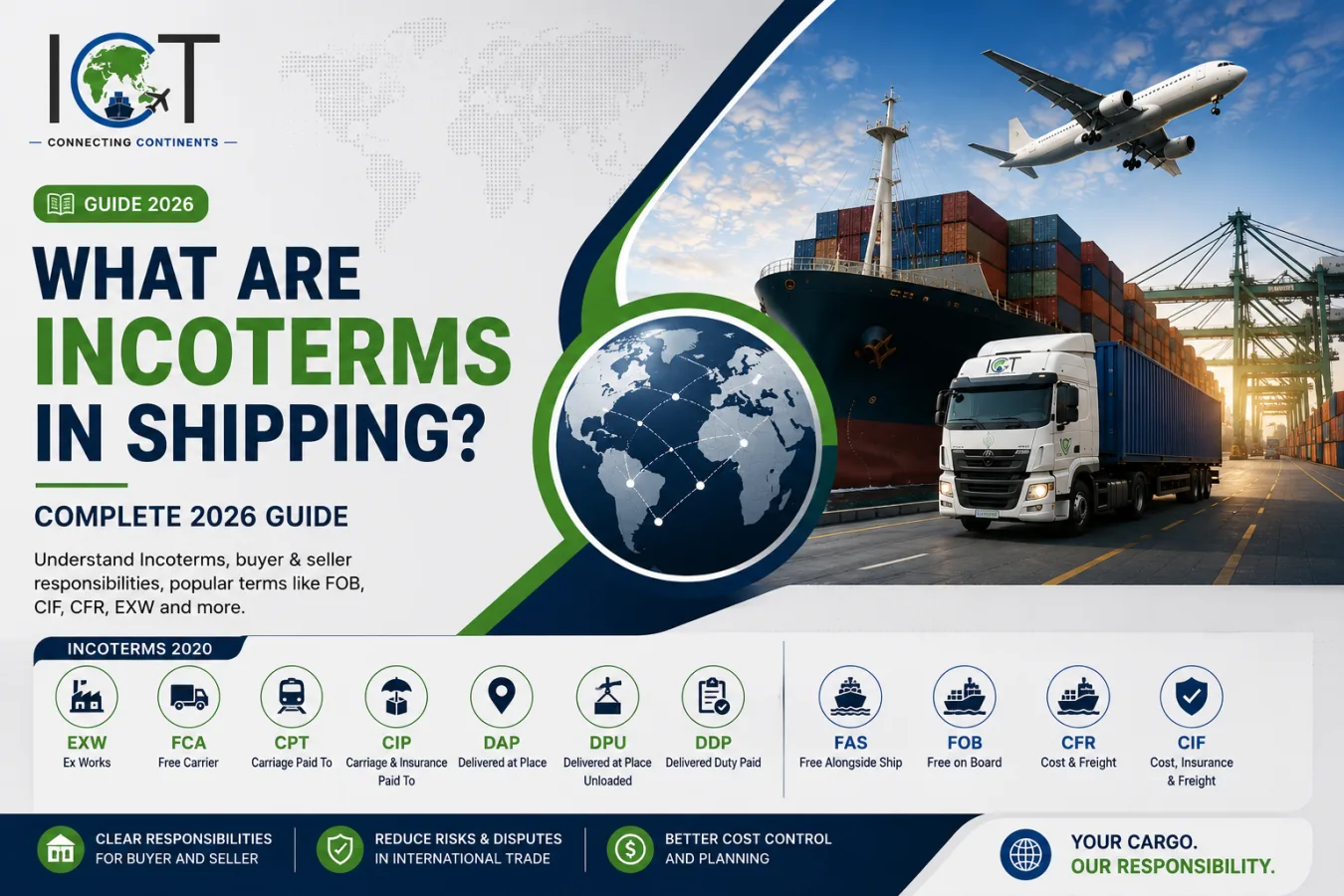
A common mistake among new traders is assuming that Incoterms cover every part of an international sales transaction.
They don't.
Incoterms primarily allocate certain costs, risks and delivery responsibilities between the seller and buyer.
Other matters should still be covered separately in the commercial agreement, including:
- Payment method
- Payment deadline
- Product specifications
- Transfer of ownership/title
- Warranty arrangements
- Dispute resolution
- Applicable law
This distinction becomes particularly important when Letters of Credit or other structured international payment arrangements are involved.
Which Incoterm Should You Choose?
There isn't one Incoterm that is best for every shipment.
The appropriate choice depends on factors including:
Cargo type: Containerized, bulk, project cargo, perishable goods, etc.
Transport mode: Sea, air, road or multimodal.
Experience: How comfortable are the buyer and seller with international logistics?
Freight control: Which party wants to negotiate and control international transportation?
Destination capabilities: Can the seller realistically manage customs and regulatory obligations in the buyer's country?
Insurance: Which party should arrange cargo insurance?
For containerized shipments in particular, businesses should understand the differences between rules such as FCA and traditional FOB usage before agreeing on terms.
Common Incoterm Mistakes to Avoid
Several problems repeatedly occur in international trade:
Using only "FOB" or "CIF" without specifying a named port.
Always identify the appropriate named place or port.
Confusing cost with risk.
The party paying freight does not necessarily carry the transportation risk for the entire journey.
Choosing DDP without understanding destination regulations.
The seller may become responsible for import processes that it cannot practically perform.
Using an Incoterm without specifying the version.
A professional contract should clearly reference the applicable rules, for example Incoterms® 2020.
Choosing terms purely because a customer requested them.
Understand your financial and operational responsibilities before accepting the term.
How a Freight Forwarder Can Help
Choosing an Incoterm is a commercial decision between the buyer and seller, but an experienced freight forwarder can help businesses understand the logistics implications of that decision.
For example, your freight partner can help determine:
- Expected freight costs
- Origin handling requirements
- Destination considerations
- Appropriate transportation modes
- Customs procedures
- Required documentation
- Estimated transit time
This information allows exporters and importers to negotiate their transactions with a clearer understanding of the actual logistics involved.
Internal link: What Is a Freight Forwarder and How Does It Work?
Plan Your International Shipments with Inter Continent Transport
International trade becomes significantly easier when responsibilities are clearly defined before the cargo starts moving.
Understanding Incoterms allows exporters and importers to know who does what, who pays for what, and when transportation risk transfers between the parties.
For businesses importing into or exporting from Pakistan, proper coordination between commercial terms, documentation, customs clearance, and transportation can help prevent unexpected costs and unnecessary delays.
Inter Continent Transport provides one-window logistics solutions covering:
- Sea Freight
- Air Freight
- Customs Clearance
- Road Transportation
- Warehousing
- Specialized Cargo Solutions
Whether your shipment is moving under FOB, CIF, CFR, FCA or another agreed Incoterm, our team can help coordinate the logistics according to your shipment requirements.
Need Help Planning Your Next Shipment?
Contact Inter Continent Transport for reliable freight services and professional logistics support.